
Purity Difference
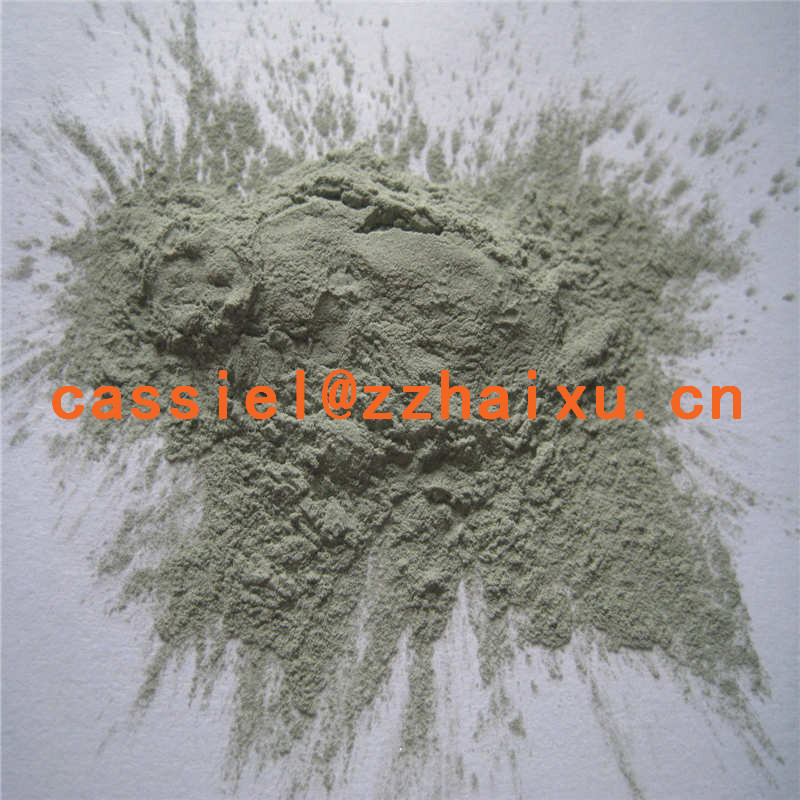
Green silicon carbide: High purity (SiC ≥99.0%), low iron content, sharp crystal edges, good self-sharpening property and low impurity content.
Black silicon carbide: SiC content above 98%, higher iron impurities, and lower hardness compared with green silicon carbide.
Comparison of Cutting Performance, Surface Roughness and Edge Chipping
Cutting Efficiency
Green SiC: Sharp cutting edges deliver higher material removal efficiency.
Black SiC: High toughness prevents grain fracture, resulting in weaker cutting force and slower cutting speed under identical conditions.
Surface Roughness Ra
Green SiC: Sharp cutting edges produce uniform fine cutting lines with superior Ra values, easily meeting optical specifications.
Black SiC: Tends to cause squeeze fracture, forming uneven cutting lines and coarse scratches.
Edge Chipping
Green SiC: Self-sharpening grains enable continuous micro-cutting, generating smaller and more consistent chipping, ideal for precision cutting of optical glass.
Black SiC: Large grains create squeezing friction, which easily leads to edge notches and unstable chipping sizes.
Impurity Risk (Critical for Optical Applications)
Black SiC contains higher iron, which may cause black spots, surface contamination and residual defects after polishing on glass.
Green SiC can be supplied in low-iron grades, suitable for high-end products such as optical lenses and optical substrates.
Application Classification
Green Silicon Carbide (GC): First choice for slurry wire cutting of optical glass, quartz, sapphire and fine ceramics.
Black Silicon Carbide: Used for ordinary stone, refractory materials and low-cost rough grinding; not suitable for optical glass.
Common Grades of Green Silicon Carbide Micropowder for Optical Glass Wire Cutting:
600#, 700#, 800#, 1000#, 1200#, 1500#, 2000#, 3000#