News

Green Silicon Carbide Powder for Plastic Grinding

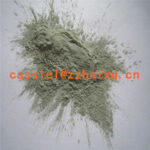
Green Silicon Carbide Powder for Plastic Grinding 1. Definition & Production Green silicon carbide (chemical formula SiC) is a synthetic abrasive made by high-temperature smelting of silica (quartz sand) and petroleum coke in a resistance furnace, with higher purity control than black SiC (typically 98.5%+ SiC, premium grades up to 99.5%). The product is a

Read More »

Green Silicon Carbide 80# for Tool Slot Sandblasting

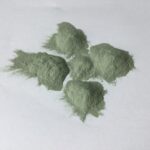
Green Silicon Carbide 80# (also known as 80 grit) is a high-performance abrasive material commonly used for tool slot sandblasting. It is particularly effective for surface preparation, cleaning, and creating precise textures on metal surfaces. Here’s a brief overview of its key properties and applications: Key Characteristics Hardness​ – Silicon carbide (SiC) is one of

Read More »

Green Silicon Carbide 46# for Photovoltaic Wear-resistant Auxiliary Materials.

6# Green Silicon Carbide (Green SiC) is a high‑purity, ultra‑hard abrasive material, widely used as a core wear‑resistant auxiliary material in the photovoltaic (PV) industry, mainly for monocrystalline/polycrystalline silicon wafer processing. 1. Basic Properties Chemical & Physical Parameters 表格 Item Standard Value Main Component SiC ≥ 99.0% Impurities Fe₂O₃ ≤ 0.40%, Free Carbon ≤ 0.20%

Read More »

Black silicon carbide for bolt grinding and polishing

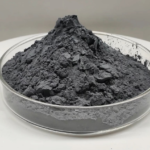
Black silicon carbide for bolt grinding and polishing Key Properties & Advantages Exceptional Hardness (9.5 Mohs): Second only to diamond and boron carbide High Thermal Conductivity: Dissipates heat effectively during grinding Sharp, Brittle Fracture: Creates fresh cutting edges continuously Chemical Stability: Resists reactions with most metals Cost-Effective: More economical than diamond or CBN abrasives Primary Applications

Read More »

What size green silicon carbide is used to polish single-crystal silicon?

1. The Role of Green Silicon Carbide Green SiC is harder and more brittle than black SiC, producing sharper fractures. This makes it ideal for stock removal and shaping silicon before the final precision polish. It is used in free abrasive slurry form (loose grains mixed with a carrier fluid) in lapping processes. 2. Typical Grit Sizes Used The

Read More »
Scroll to Top