
Expanding automotive lens and AR optics capacity drives rising demand for double-sided lapping of K9 glass, fused silica and waveguide substrates.Thanks to its stable grinding performance, low-iron high-purity green silicon carbide (GC) micropowder has become the mainstream abrasive for rough and intermediate lapping processes.
Optical processing imposes strict control over abrasive impurities. Iron elements tend to form stains and spots on glass surfaces, which directly reduce optical yield. It features high SiC purity, ultra-low iron content and narrow particle size distribution without oversized grains, greatly lowering the risk of scratches on workpieces.
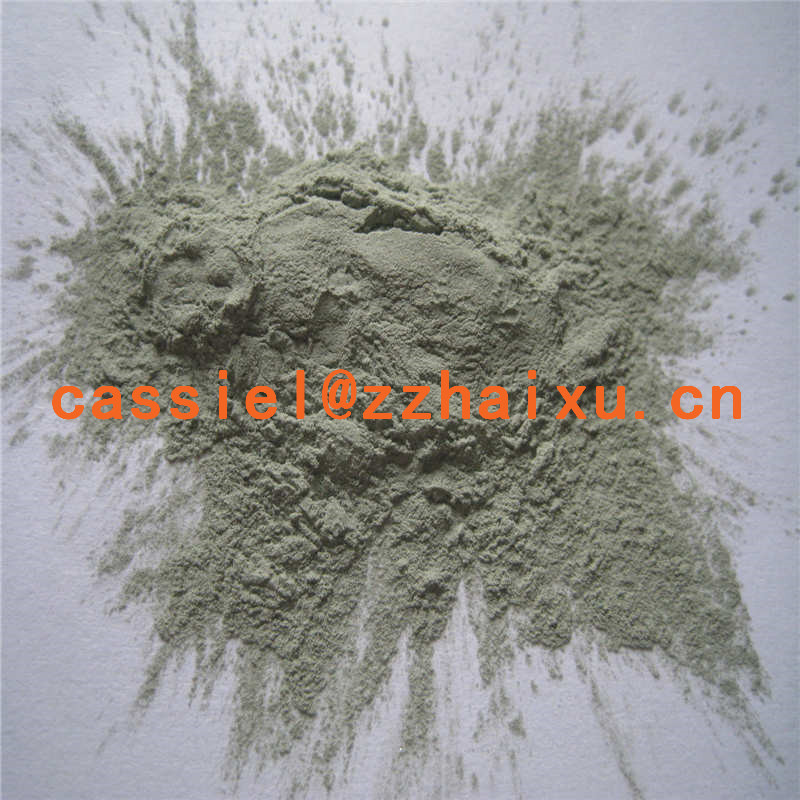
Green silicon carbide has moderate crystal brittleness and excellent self-sharpening property It also possesses good thermal conductivity, which quickly dissipates lapping heat and reduces thermal deformation and subsurface damage of substrates. It is suitable for mass stock removal on double-sided optical lapping machines.
In terms of process division, green silicon carbide micropowder efficiently removes blank allowance and eliminates tool marks from previous processes. Cerium oxide polishing powder is generally used for the subsequent final mirror polishing. The combination forms a mature optical processing solution. FEPA grits from F800 to F1500 are currently the most popular specifications purchased by optical customers. Inquiries from overseas optical processing factories keep growing; buyers prioritize optical-grade green silicon carbide micropowder with complete COA impurity test reports and stable batch consistency.
Green silicon carbide Physical properties
1.Color:Green
2.Hardness: Knoop2600
3.MohsHardness: 9.4(min)
4.Specific Gravity:3.2 g/cm3
Green silicon carbide chemical composition
- 1.SiC: 98.5%-99.5%
2.Fe2O3: 0.05-0.1%
3.F.C:0.1-0.2%