
1. Light Blocking Mechanism of Black Silicon Carbide (Core Principle)
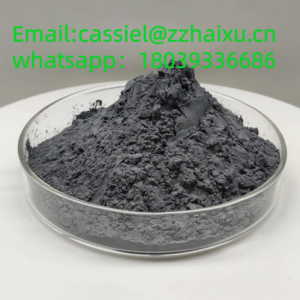
Black silicon carbide (α-SiC, smelted black SiC with a small amount of free carbon) powder generally has a particle size of 3–5 μm, matching the infrared band of thermal runaway.
Infrared absorption: SiC has intrinsic absorption in the mid-infrared range of 2.5–7 μm. Free carbon contained in the powder further enhances infrared absorption.
Infrared scattering: Powder particles act as heterogeneous phases. When particle size is close to the infrared wavelength, electromagnetic waves generate Mie scattering on particle surfaces. This changes the propagation direction of infrared light and blocks radiation penetration through the thermal insulation layer.
black silicon carbide
Black silicon carbide is quartz sand, petroleum coke in primary raw materials, smelting in the high temperature resistance furnace.
Physical Properties
1.Hardness: Mohs9.15(min)
2.Melting Point:2250℃
3.Maximum service temperature (℃) :1900℃
4.Specific Gravity:3.90g/cm3
5.Color:Black
Chemical Composition
- SiC: 98-99%
- Fe2O3: ≤0.15%
3.F.C: ≤0.20%
Comparison: Green silicon carbide features higher purity and less free carbon, with slightly weaker absorption. Thanks to inherent free carbon, black silicon carbide delivers superior light-blocking performance at lower cost, making it the mainstream filler for aerogel in power batteries.
2. Addition Principle in Aerogel Thermal Insulation Sheet Manufacturing Process
Process Flow Logic
Silicon source sol preparation → Mix in micro powder (light-shading filler) + fiber reinforcement (chopped glass fiber / basalt fiber) → Sol-gel curing → Aging → Solvent replacement → Supercritical drying / ambient pressure drying → Cutting into finished insulation sheets
Mixing stage: Black silicon carbide powder is pretreated by iron removal and narrow particle size classification. Low metallic impurities are required for lithium batteries to avoid short-circuit risks inside cells. The powder is dispersed into the silica sol precursor liquid.
3. Design Logic of Key Parameters
Dosage: Usually 5%–15% of the solid phase. Insufficient dosage leads to poor light blocking. Excessive dosage causes particle contact to form solid thermal bridges, raising solid-phase thermal conductivity and worsening overall insulation performance.
Particle size selection: 3–5 μm. It matches the 2.5~7 μm infrared wavelength to achieve optimal Mie scattering effect. Ultra-fine powder (submicron) tends to agglomerate. Overly coarse powder causes local thermal bridges and powder falling-off.