
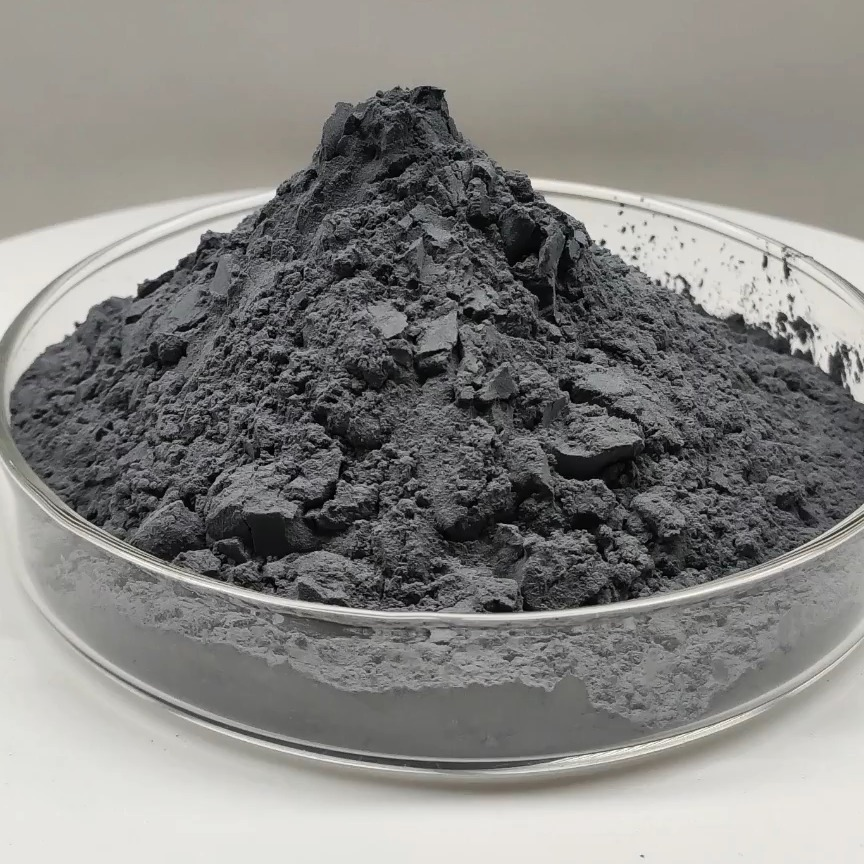
Black silicon carbide for bolt grinding and polishing
Key Properties & Advantages
Exceptional Hardness (9.5 Mohs): Second only to diamond and boron carbide
High Thermal Conductivity: Dissipates heat effectively during grinding
Sharp, Brittle Fracture: Creates fresh cutting edges continuously
Chemical Stability: Resists reactions with most metals
Cost-Effective: More economical than diamond or CBN abrasives
Primary Applications in Bolt Processing
1. Deburring & Edge Radiusing
Removes machining burrs from bolt threads and heads
Creates uniform edge radii for improved fatigue resistance
Common grit sizes: #46 – #120 (coarse to medium)
2. Surface Preparation for Coatings
Creates consistent surface profiles for plating (zinc, chrome) or coatings
Removes oxidation and surface imperfections
Typical grits: #150 – #320
3. Polishing & Bright Finishing
Produces cosmetic or functional bright surfaces
Final polishing with #400 – #1000+ microgrits
Often used in vibratory or rotary barrel processes
Common Processing Methods
Mass Finishing Operations
Vibratory Finishing: Most common method; bolts + SiC media + compound in vibratory bowls
Rotary Barrel Tumbling: For larger batches; slower but thorough processing
Centrifugal Barrel: High-energy process for faster results
Abrasive Media Specifications
Preformed Shapes: Triangles, cones, or cylinders (3-25mm sizes)
Angle-Cut Media: Specifically designed for threaded components
Ceramic-Bonded SiC: Durable media with consistent wear characteristics
Technical Guidelines
Grit Size Selection
| Application | Grit Range | Surface Roughness (Ra) |
|---|---|---|
| Heavy deburring | #46 – #80 | 3.2 – 6.3 μm |
| General finishing | #120 – #220 | 0.8 – 1.6 μm |
| Pre-plate finish | #280 – #400 | 0.4 – 0.8 μm |
| Bright polishing | #600 – #1000 | <0.2 μm |
Optimal Processing Parameters
Media-to-Part Ratio: 2:1 to 4:1 by volume
Compound Concentration: 1-3% by weight in water
Processing Time: 15 minutes to 4 hours depending on requirements
pH Control: Maintain 8.5-10.5 for optimal performance
Specialized Considerations for Bolts
Thread Protection
Use appropriately sized media to prevent thread clogging
Consider plastic or ceramic media with SiC abrasive embedded
Intermittent reverse rotation helps clear threads
Material-Specific Recommendations
Carbon Steel Bolts: Standard black SiC works excellently
Stainless Steel: May require finer grits to prevent embedding
Titanium/Alloys: Use lower pressures to prevent galling
Comparison with Alternative Abrasives
| Abrasive | Hardness | Best For | Limitations |
|---|---|---|---|
| Black SiC | Very High | General-purpose bolt finishing | Can be too aggressive for soft materials |
| Aluminum Oxide | High | Tough materials, heavy stock removal | Less efficient than SiC |
| Ceramic Beads | Medium | Final polishing, minimal stock removal | Limited cutting ability |
| Walnut Shells | Soft | Drying, light burnishing | No significant material removal |
Best Practices
Process Development
Start with less aggressive parameters and adjust upward
Test small batches before full production
Document parameters for consistency
Media Management
Separate media from parts using appropriate screens
Regularly replenish media to maintain cutting efficiency
Monitor media wear and replace when effectiveness declines
Quality Control
Check thread dimensions regularly during long cycles
Verify surface roughness with profilometers
Inspect for media lodging in threaded areas
Environmental & Safety Notes
Dust Control: SiC generates fine dust requiring proper ventilation
Water Treatment: Compounds may require pH adjustment before disposal
PPE: Gloves and eye protection recommended when handling media
Economic Considerations
Media Life: Black SiC typically lasts 10-20 processing cycles
Processing Speed: Generally faster than aluminum oxide alternatives
Total Cost: Often lower than specialized plastic or ceramic media
Conclusion
Black silicon carbide remains a top choice for bolt grinding and polishing due to its excellent balance of cutting efficiency, durability, and cost-effectiveness. For most steel bolts requiring deburring and surface refinement, it provides superior results when properly applied with optimized process parameters.
Pro Tip: For high-volume bolt finishing, consider a multi-stage process starting with coarse black SiC for deburring, followed by finer SiC for surface refinement, and finishing with specialized media for final polishing if required.