
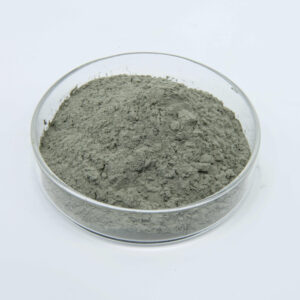
β‑SiC (3C‑SiC cubic silicon carbide) powder possesses far superior sintering activity compared with α‑SiC (hexagonal green/black silicon carbide). It enables densification via lower‑temperature pressure‑less sintering, hot pressing and hot isostatic pressing. Its cubic crystal delivers isotropic thermal‑mechanical properties with fine and uniform grains. After sintering with high‑purity powder, it can be fabricated into structural ceramics for semiconductor equipment, wear‑resistant & corrosion‑resistant structural parts, high‑temperature kiln furniture and reinforcing phases for ceramic‑matrix composites.
Core Material Advantages for Sintered Ceramics
- High sintering activity: Compared with α‑SiC, β‑SiC sinters at lower temperature and achieves high density easily. It is suitable for pressure‑less sintering to produce large‑size and complex‑shaped components, lowering sintering difficulty and production costs.
- Isotropic performance: Cubic crystal shows no directional difference in thermal and mechanical properties, granting good dimensional consistency and low deformation after precision machining.
- Fine‑grain & high strength: Sintered bodies feature fine grains, high flexural strength and excellent thermal‑shock resistance, resisting cracking under rapid heating‑cooling cycles.
- Wear‑corrosion resistance & high thermal conductivity: Resistant to strong acid & alkali corrosion and high‑temperature oxidation; high thermal conductivity and low thermal‑expansion coefficient. High‑purity grade contains ultra‑low metallic impurities to meet semiconductor cleanliness requirements.
- Doping modification available: Conductive or semi‑conductive performance can be realized by sintering doping to satisfy electrical working conditions.
Main Application Scenarios
1. Sintered Ceramic Components for Semiconductor Equipment (High‑purity β‑SiC Powder)
Sintered from high‑purity β‑SiC powder (different from CVD monolithic parts), for domestic substitution of mature‑node processes: ‑ Plasma etching chamber: edge ring, focus ring, chamber liner, insulating support base ‑ Heat treatment / epitaxy equipment: wafer susceptor, wafer boat, cantilever paddle, furnace tube, heat‑shield baffle ‑ Lapping & inspection equipment: ceramic vacuum chuck, dummy wafer, precision motion‑platform components
Note: Sintered β‑SiC is inferior to monolithic CVD‑β‑SiC in purity and density, yet it has prominent cost advantages for mature‑node applications.
2. Wear‑Resistant & Corrosion‑Resistant Industrial Structural Ceramics
‑ Mechanical seal rings, ceramic bearings, pump‑valve wear‑resistant liners, sand‑blasting nozzles, burner nozzles ‑ Corrosion‑resistant wear‑proof parts for chemical and non‑ferrous‑metal industries against strong‑medium erosion
3. High‑Temperature Kiln Thermal Components
Roller bars, beams, shelf plates, saggers, crucibles, thermocouple protection tubes, radiant heating tubes. Applied in roller kilns and heat‑treatment furnaces, good thermal‑shock resistance for frequent temperature rise‑fall cycles, longer service life than traditional α‑SiC kiln furniture.
4. Reinforcing Phases for Ceramic‑Matrix Composites (CMC)
β‑SiC powder / whisker serves as reinforcing filler for SiC/SiC composite ceramics, applied in high‑temperature thermal‑structural components and thermal‑shock‑resistant protective parts for aerospace to improve toughness and thermal‑shock resistance.
5. Military‑Protection & Special High‑Temperature Components
Bullet‑proof ceramic armor plates, lightweight anti‑impact components; radiation‑resistant high‑temperature structural parts for nuclear industry, resistant to high‑temperature corrosion and radiation damage.
Key Technical Parameters of Sintered β‑SiC Ceramics
| Item | Sintered β‑SiC Ceramics |
|---|---|
| Crystal phase | β‑SiC (3C‑SiC cubic phase) |
| Purity | ≥99.99% (semiconductor grade) |
| Density | 3.18‑3.20 g/cm³ |
| Thermal conductivity | 220‑280 W/(m·K) |
| Flexural strength | 420‑520 MPa |
| Volume resistivity | 0.01‑10 Ω·cm (tunable by doping) |
| Max service temperature | 1400 ℃ under vacuum; 1700 ℃ in air |